
IdentifAI
AI-Driven Operational Anomaly Prediction
Too many signals. Not enough clarity
Too many signals. Not enough clarity
Modern networks produce a constant stream of alerts, metrics, and anomalies.
But not all of them matter, so operators end up spending time chasing noise instead of focusing on what actually needs attention.
Current approaches fall short
A big part of this comes down to how anomalies are handled today.
Most approaches rely on static thresholds, manual rules, or labelled data, which don’t adapt well as network conditions change and require ongoing tuning to stay relevant.
As a result, teams either miss emerging issues or face more alerts than they can realistically act on, leaving them in a reactive position rather than in control.
Predict issues before they happen
Predict issues before they happen
IdentifAI changes the timing.
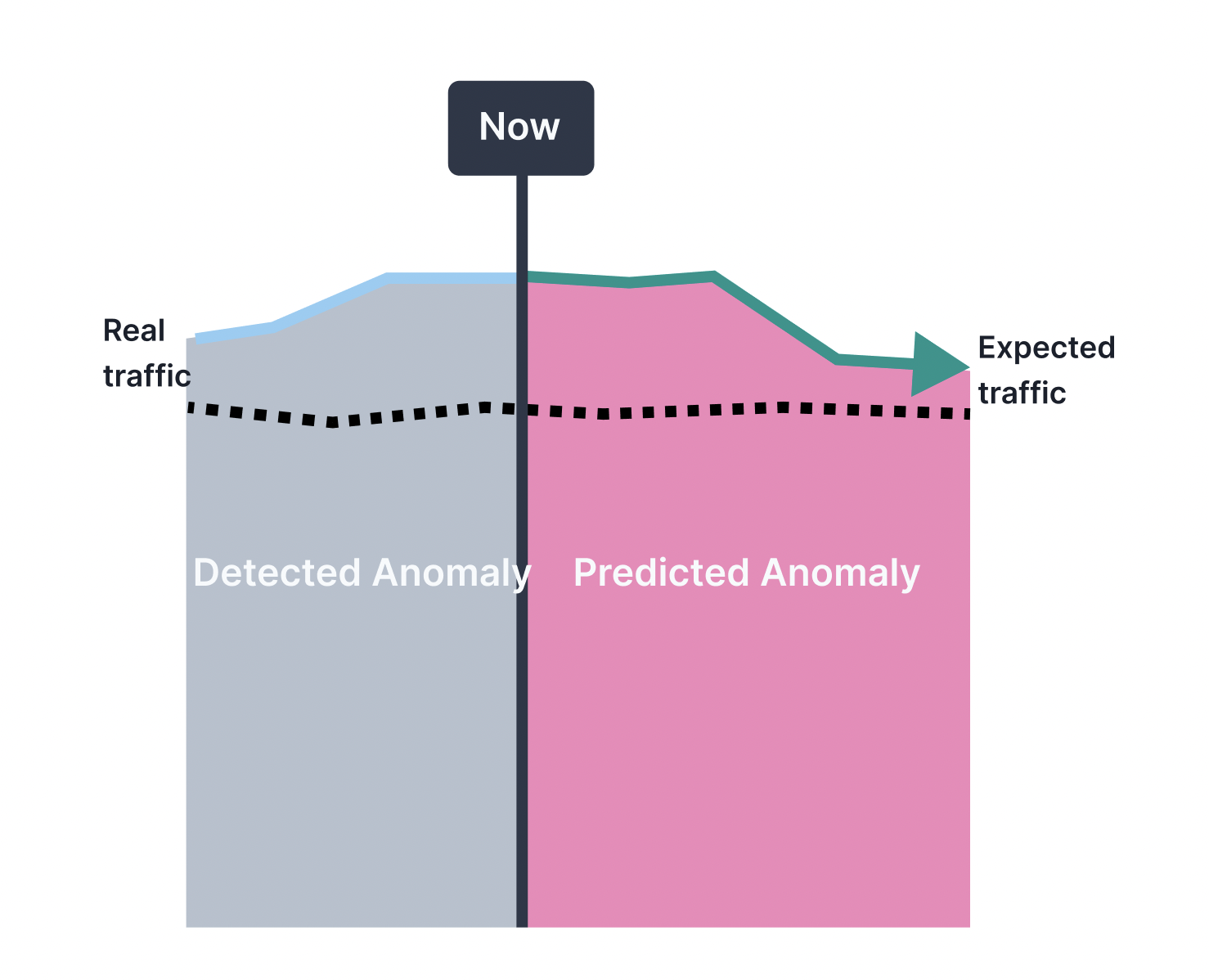
Instead of detecting anomalies after they occur, it predicts them in advance. By analysing multiple KPIs in parallel, it learns what normal behaviour looks like across the network. When patterns start to shift, even slightly, it identifies where things are heading.
That gives operators time to act before users are affected.
Built to reduce noise, not add to it
Built to reduce noise, not add to it
IdentifAI is designed to keep false alarms low, so operators aren’t overwhelmed by unnecessary alerts.

It learns baselines automatically, without manual labelling, which removes subjectivity and reduces setup time.

And because it runs on standard infrastructure, it’s lightweight and easy to deploy.

Fewer incidents. Less effort.
Predictions on their own aren’t enough.
By connecting insights to action, operators can define how the system should respond when a risk is identified, whether that’s triggering alerts, adjusting configurations, or automating countermeasures.
The result is a shift from reactive troubleshooting to proactive control.
Fewer incidents. Faster response. Less manual effort.
Stay ahead of network issues
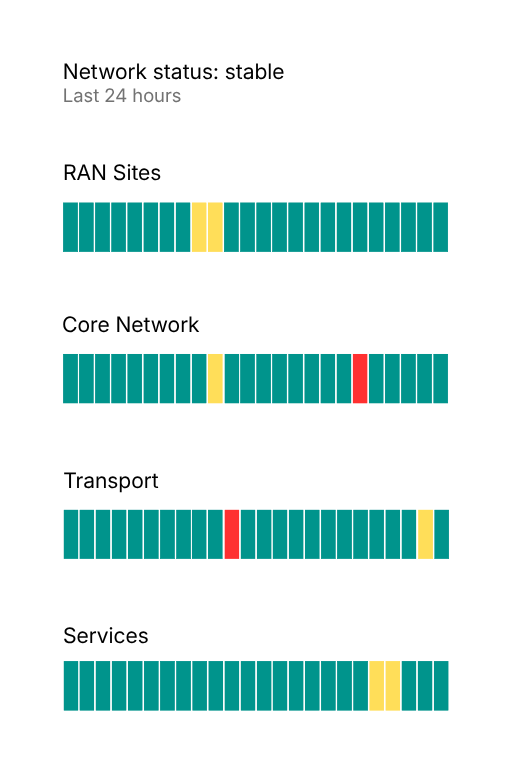
Identify problems before they impact performance.