
Post-MWC25 Analysis
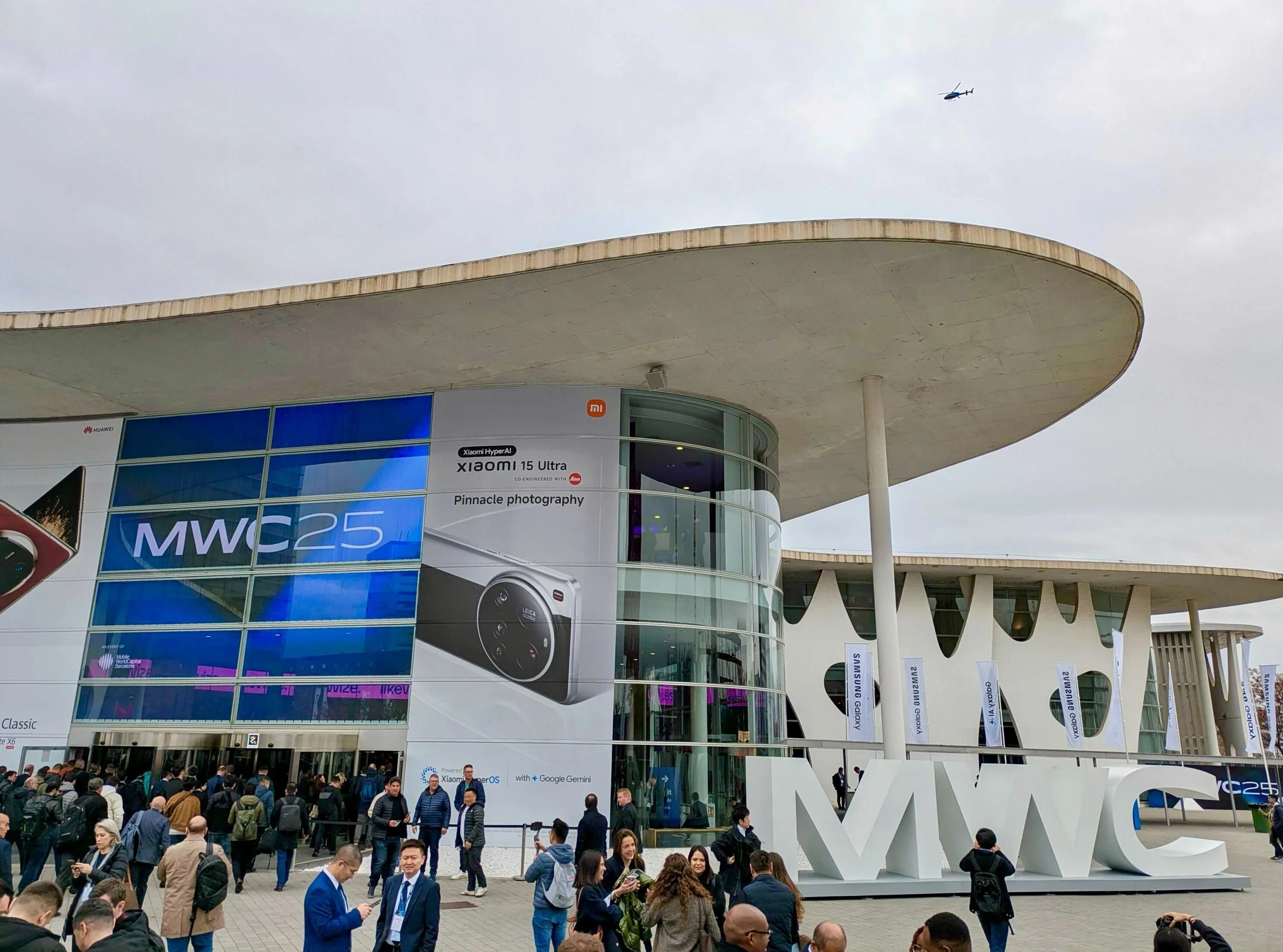
As we leave Barcelona behind, we can’t help but reflect on the most relevant conversations that shaped the Mobile World Congress this year. From AI to advancements in non-terrestrial networks (NTNs) and the growing focus on energy efficiency, MWC 2025 remains a prime venue where to take the pulse on the direction in which the telecom industry is heading.
Here are the key highlights from this year’s event from our perspective.
AI Has Taken Roots — But There’s More to Be Explored
Much like last year, AI was talked about almost everywhere. Telcos are actively exploring AI adoption, particularly as a way to drive new revenue streams through AI-powered services. However, rather than contemplating AI-powered network management and fully autonomous networks, most conversations revolved around how GenAI and Large Language Models (LLMs) can assist engineers rather than replace them. The hesitation around full automation remains anchored in concerns about model reliability, data security, and the challenges of integrating AI into legacy infrastructure.
At Net AI, we believe that full automation of a broad set of run-of-the-mill tasks remains a great and vastly untapped opportunity that can improve the way mobile networks operate, relieve network engineers from time-consuming tasks, and ensure significant savings for network providers. Yet, achieving full automation requires shifting attention towards “task- and need-driven” AI/ML model design — one that focuses on solving pressing needs within telco operations, in a reliable and scalable way.
Digital Twins: Bringing Networks to Life in a Virtual World
Another theme in focus this year was Digital Twins, a concept that is gaining traction in telecom. With network complexity increasing, Digital Twins are becoming an appealing tool — not just for troubleshooting but for long-term strategic planning. By creating virtual replicas of physical networks, operators can simulate, test, and optimize network performance before making real-world changes. This is particularly useful for validating predictive maintenance, traffic management, and energy optimisation solutions that would enable telcos to take proactive steps towards AI adoption.
Additionally, Digital Twins can help address safety concerns by providing operators and vendors with a secure, controlled environment for testing AI models without exposing sensitive network data or enacting decisions that may risk degrading service operation.
The Rise of NTNs: A Step Closer to Truly Global Connectivity
Non-Terrestrial Networks (NTNs) was a topic of intense discussion at MWC this year. GSMA organised the The future of Satellite & NTN summit which explored key themes in the evolving NTN and satellite infrastructure landscape, including customer demand and willingness to pay for satellite services, the modernisation of satellite architecture, and strategic investments in deploying 5G NTN. By seamlessly connecting mobile devices to high altitude platform stations (HAPS) and satellite networks in a manner that is compatible with the 3GPP ecosystem, the potential exists to fill connectivity gaps in remote or underserved areas cost-effectively. NTNs could further provide critical communications support during disaster response and for environmental monitoring.
We’re proud to contribute to this transformation as part of the EU-funded ETHER project, which focuses on the seamless integration of terrestrial and non-terrestrial networks. With a vision of 100% global coverage, ultra-reliable service continuity, and drastically improved energy efficiency, ETHER is paving the way for a more connected world.
Speaking of energy efficiency…
Running AI on CPUs: A Shift Towards Sustainability
As the telecom industry grapples with growing energy-related OPEX and with the necessity to meet net zero targets, energy efficiency was naturally a hot topic at MWC. In their Telecom Energy Efficiency Benchmark, GSMA revealed that progress has been made as operators are relying more on renewables and are sunsetting legacy equipment that entails high energy use.
On the AI front, while GPUs excel at parallel processing and are essential for AI model training, we’re seeing model inference being run on CPUs — possibly augmented with dedicated AI capabilities — where possible to reduce the energy footprint of RAN tasks. This shift highlights a growing trend: AI adoption must balance performance with sustainability to ensure that innovation doesn’t come at the cost of excessive energy consumption.
Overall MWC 2025 reinforced a clear message: the telecom industry is entering a new era of AI-driven efficiencies and global connectivity. We’re excited to contribute to this transformation by which telecom networks are becoming more intelligent, resilient, and accessible.
